Personal care at home will be fully funded from 1 October. Here is what your family gets back
By Chris Moutzikis ·
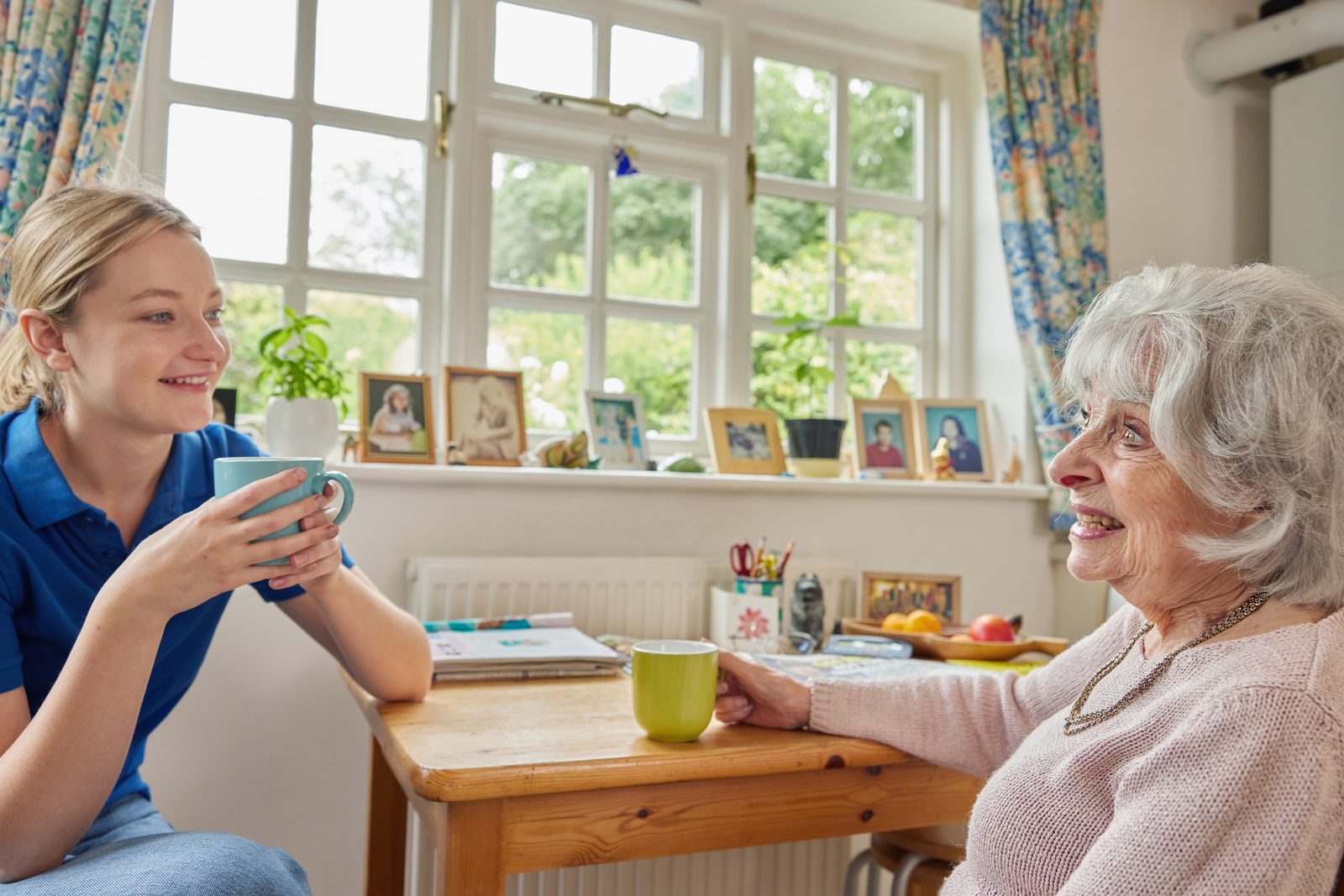
Picture a couple. Call them Judith and Ray. Judith is 79 and had a hip replacement last year. Three mornings a week, a support worker comes to help her shower and dress. It is the kind of help that lets her stay in the home she loves. But every visit shows up on a statement. Each quarter, Judith and Ray sit at the kitchen table and add up what the help is costing them.
From 1 October 2026, that particular line on their statement goes to zero.
In short: from 1 October 2026, personal care services under the Support at Home program will be fully funded by the Australian Government. That covers help such as showering, dressing and continence care. Participants will pay no contribution for these services from that date. Contributions still apply to other service types, such as cleaning and gardening, so it pays to understand which is which.
Here is what is changing, who it applies to, and what it could mean for your household budget.
What exactly changes on 1 October 2026?
Support at Home is the government program that funds in-home aged care for older Australians. It replaced Home Care Packages when it launched.
Under Support at Home, services sit in three categories, and the category decides what you contribute:
- Clinical supports, such as nursing and allied health. Fully government funded. You pay nothing.
- Independence services, which have included personal care. You pay a contribution based on your means.
- Everyday living services, such as cleaning, gardening and meal preparation. You pay a higher contribution, again based on your means.
From 1 October 2026, personal care moves from the independence category into clinical supports. The Department of Health, Disability and Ageing puts it plainly. Personal care will be fully funded. If personal care is approved in your support plan, there is no out of pocket cost (Department of Health, Disability and Ageing).
The government’s reasoning is that personal care is essential to health, dignity and wellbeing, not an optional extra. Industry reporting puts the cost of the change at around $1 billion over four years (Hellocare).
One important detail: the change applies to services delivered on or after 1 October 2026. It does not apply to services delivered before that date, so contributions paid earlier in the year are not refunded.
What counts as personal care?
The Department’s announcement lists showering, dressing and non-clinical continence management as personal care (health.gov.au). Industry summaries describe the category as also covering help with toileting, eating, personal hygiene and taking daily medications (Aged Care Decisions).
If you are unsure whether a service in your support plan counts as personal care, ask your provider to show you how each service in your plan is categorised. It is a fair question, and the answer directly affects what you pay.
How much could your household save?
Many Australians we speak with had assumed help at home would always cost something. So the first question is usually a practical one: what does this actually save us?
That depends on two things: how much personal care you receive, and what contribution rate applied to you.
Contribution rates under Support at Home are set by your means. For independence services, the category personal care has sat in, full age pensioners contribute 5 per cent of the service price. Self-funded retirees without a Commonwealth Seniors Health Card contribute 50 per cent. Part pensioners and Seniors Health Card holders sit somewhere in between, based on an assessment by Services Australia (Department of Health, Disability and Ageing).
On price, the Department’s indicative pricing published in October 2025 put the national median for personal care at around $100 per hour, with most providers charging between $85 and $115 (Department indicative prices, reported by Carevo).
Here is an illustration. Take a participant receiving three hours of personal care a week at $100 per hour. That is $15,600 of personal care services a year.
- A full pensioner contributing 5 per cent has been paying about $780 a year. From 1 October, that becomes $0.
- A self-funded retiree contributing 50 per cent has been paying about $7,800 a year. From 1 October, that also becomes $0.
- A part pensioner has been paying somewhere between those two figures, depending on their Services Australia assessment. From 1 October, $0.
These are illustrations, not quotes. Your own numbers depend on your plan, your provider’s prices and your assessed rate. But the direction is the same for everyone: whatever you were contributing for personal care stops for services delivered from 1 October.
What will you still pay contributions for?
This is the part worth sitting with, because the change does not make in-home care free of contributions.
Independence services that are not personal care keep their means tested contributions of 5 to 50 per cent. Everyday living services keep the higher range of 17.5 to 80 per cent. That covers the cleaning, gardening and meal preparation many households rely on most (Department of Health, Disability and Ageing).
For self-funded retirees in particular, everyday living contributions can remain a meaningful line in the budget. There is a lifetime cap on what you can be asked to contribute across your care journey. Services Australia keeps track of your total (Services Australia).
Two other boundaries to note:
- The change is for Support at Home participants only. It does not apply to the Commonwealth Home Support Programme, the entry-level program many older Australians use for lighter help (Aged Care Decisions).
- If you moved across from a Home Care Package, transitional arrangements may affect what you pay. My Aged Care can confirm how the rules apply to you (My Aged Care).
What does this mean for you at 70, 75 or 80?
If you are already receiving personal care through Support at Home, the saving arrives without paperwork. Contributions for personal care simply stop applying to services delivered from 1 October 2026. It is still worth checking your first statement after October to confirm your provider has applied the change correctly.
If you have been keeping personal care hours low because of the cost, October is a good time to revisit your support plan. Some families have trimmed morning visits to hold costs down. From October, the cost reason for doing that falls away for personal care.
If you are helping a parent plan ahead, the timing matters. A care plan assessed and in place before summer means the fully funded arrangement applies from the first visit. Assessments can take time to arrange, so starting the My Aged Care conversation early is sensible.
And if you are budgeting for retirement more broadly, this change shifts one number in a bigger picture. Care costs are among the hardest things to plan for. Nobody knows in advance how much help they will need, or for how long. It is worth understanding which costs the government now carries and which remain yours. It also helps to see how your income, savings and home fit together to cover the rest. Every situation is different, which is why a conversation, at your own pace, is usually a better starting point than a spreadsheet. It is the conversation our Retirement Funding Specialists at Money at 60 have with families every week, and one you are welcome to have with us in your own time.
The takeaway
From 1 October 2026, personal care under Support at Home becomes fully government funded. Help with showering, dressing and continence care will no longer attract a contribution, whatever your means. Cleaning, gardening and other everyday living services still will.
The sensible next steps are small ones. Check which services in your plan are categorised as personal care. Look at your first statement after October. If the change frees up room in your budget, take your time deciding what to do with it. And if it raises questions about how to fund the care and retirement you want, talk it through with people you trust, family included.
If a sounding board would help, you are welcome to bring your questions to a relaxed 15-minute call with a Retirement Funding Specialist at Money at 60. No commitment. Family members are welcome to join.
Sources
- Department of Health, Disability and Ageing (2026) Personal care to be fully funded under Support at Home from October, health.gov.au
- Department of Health, Disability and Ageing, Support at Home participant contributions, health.gov.au
- Department of Health, Disability and Ageing, Support at Home personal care contribution change, health.gov.au
- My Aged Care, Changes to contributions while accessing Support at Home
- Services Australia, Annual and lifetime caps for your aged care costs
- Aged Care Decisions (2026) Support at Home personal care fees: what changes from October 2026?
- Hellocare (2026) How Support at Home’s personal care funding changes from October 2026
- Carevo (2026) Support at Home prices 2026: indicative costs, reporting Department of Health indicative prices published October 2025
Money at 60 is a credit assistance provider, not a lender. CRN 577820. Authorised under Invictus Finance Solutions Pty Ltd, ACL 392962. Content is general in nature and not personal financial advice.
Your Questions, Answered
Bring your questions about accessing the wealth in your home. A Retirement Funding Specialist will answer them in plain English, at your pace.
Book your 15-minute callNo commitment. Family members are welcome to join.